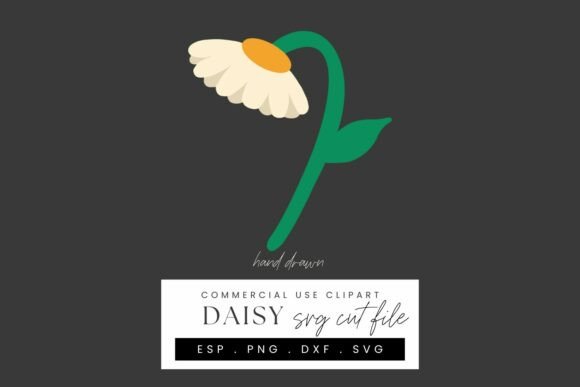
Daisy Papercraft SVG Cut File, Layered
As a designer who spends more time than I care to admit testing digital assets on actual fabric, I approach every new download with a mix of optimism and skepticism. The market is flooded with "ready-to-stitch" files that look perfect in the software but fall apart under the needle. Today, I am evaluating the Daisy Papercraft SVG Cut File, Layered. At first glance, this asset is categorized under Crafts and Graphics, which immediately raises an eyebrow for someone looking specifically for machine embroidery. However, the description highlights clean, well-defined layers designed for paper craft, which suggests a potential versatility if we are willing to adapt our workflow.
My initial impression of the Daisy Papercraft SVG Cut File, Layered is one of structural integrity. In the world of digital design, "clean layers" are often the difference between a beautiful finished product and a tangled mess of thread. When I opened the file, the visual personality felt fresh and organic. It isn't a generic flower; it has a specific mood that leans toward rustic elegance or modern cottagecore aesthetics. The layout creates a natural flow, making it feel like it belongs in a nursery setting or as a subtle accent on a boutique tote bag. But does it translate from a screen to a hoop? That is the real question.
From Digital Asset to Embroidered Reality
I recently considered using this design for a custom embroidered tote bag project intended for a local holiday market. The client wanted something unique that blended traditional papercraft charm with durable textile art. The concept was to use the layered nature of the Daisy Papercraft SVG Cut File, Layered to create a dimensional effect, perhaps by stitching the center separately from the petals to add texture. This is where the design's specific attributes become crucial.
If you are planning to use this as an applique design, the well-defined layers are a massive advantage. They allow for precise cutting of fabric pieces before they ever touch the stabilizer. Imagine creating a sweatshirt embroidery piece where the daisy stem is a running stitch outline, and the petals are distinct satin stitch sections. The clean lines mean less trimming and fewer errors during the hooping process. For small business owners and Etsy sellers, this precision translates directly to faster production times and higher customer satisfaction. A messy edge on a handmade product can be the difference between a five-star review and a refund request.
The design also shines when applied to baby items. There is something inherently gentle about a daisy motif, and the layered structure allows for soft, rounded edges that are safe for infants. If I were to convert this into a digital embroidery file for a onesie, the separation of layers would let me vary the stitch density. I could use a lighter fill stitch for the outer petals to keep them flexible against the skin, while using a denser stitch for the stem to ensure it holds its shape. This level of control is what separates professional work from amateur attempts.
Navigating Fabric Challenges and Limitations
While the design has strong potential, it requires careful consideration regarding where it should be used. Not every surface is suitable for a detailed floral motif. If you plan to place this on a cap or hat, you must evaluate the curvature of the surface. Curved surfaces like caps can distort the spacing of the layers if the design is not digitized correctly for the curve. The Daisy Papercraft SVG Cut File, Layered might lose its symmetry if the tension varies across the curved area.
Similarly, textured fabrics present a significant challenge. While the design looks crisp on a computer screen, embroidery relies on the needle penetrating the material. On thick, nubby fabrics, fine details can get lost, and the definition of the layers may blur. Thin or stretchy fabrics require extra attention to stabilizers. Without proper support, the weight of the stitches could cause the fabric to pucker, ruining the delicate balance of the daisy. Dark fabrics are another consideration; if the thread colors chosen do not have sufficient contrast, the design will disappear into the background, reducing the visual appeal and perceived value of the item.
There are also practical constraints regarding small hoop sizes. If your machine only accommodates a 4x4 inch hoop, you need to verify that the entire layered composition fits without losing detail. Tiny lettering or intricate corners within the design might become indistinguishable if scaled down too much. Furthermore, products that need frequent washing, such as kitchen towels or aprons, demand robust stitching. If the design includes long, unanchored threads, they may snag during laundering. Always inspect small details and test the durability of the stitch density before mass-producing these items.
Strategic Use for Commercial Success
For creative entrepreneurs and commercial embroidery projects, the Daisy Papercraft SVG Cut File, Layered offers a unique selling proposition. It bridges the gap between paper art and textile art, allowing for innovative product lines. You could offer personalized gifts where the layering technique mimics the look of a scrapbook page stitched onto a pillow cover. This kind of creativity drives buyer engagement and sets your brand apart from competitors offering standard floral patterns.
When marketing these finished products, the story matters. You can highlight how the design's layered construction adds depth and sophistication to the final piece. Whether it is a holiday gift set or a boutique branding element, the professionalism of the execution speaks volumes. Customers trust brands that pay attention to the nuances of their designs. A consistent aesthetic across your product line builds recognition and loyalty.
However, before you commit to a full production run, there are essential steps to take. Test the design on scrap fabric first to see how the layers interact with different materials. Check thread color contrast to ensure the design pops. Review the stitch density to prevent puckering. Confirm the hoop size matches your machine capabilities. Inspect small details closely to ensure they remain clear after stitching. It is also wise to test it in black and white mockups to understand the silhouette and value contrast independent of color.
Finally, compare light and dark fabric backgrounds to see how versatile the design truly is. Use proper stabilizer to support the fabric during the stitching process. Crucially, check whether the design works for both personal and commercial projects. Licensing terms can vary wildly, so confirm the rules before selling finished items or digital products derived from this file. If the file is originally intended for paper craft, you may need to manually adjust the digitization settings to optimize it for embroidery, ensuring that the satin stitch, fill stitch, and running stitch are balanced correctly.
In conclusion, the Daisy Papercraft SVG Cut File, Layered is a promising asset for those willing to put in the preparation work. Its clean layers and defined shapes provide a solid foundation for high-quality embroidery projects ranging from custom apparel to nursery decor. By approaching it with a critical eye and understanding its limitations, you can transform a simple graphic into a stunning, market-ready product that resonates with customers and elevates your craft business.